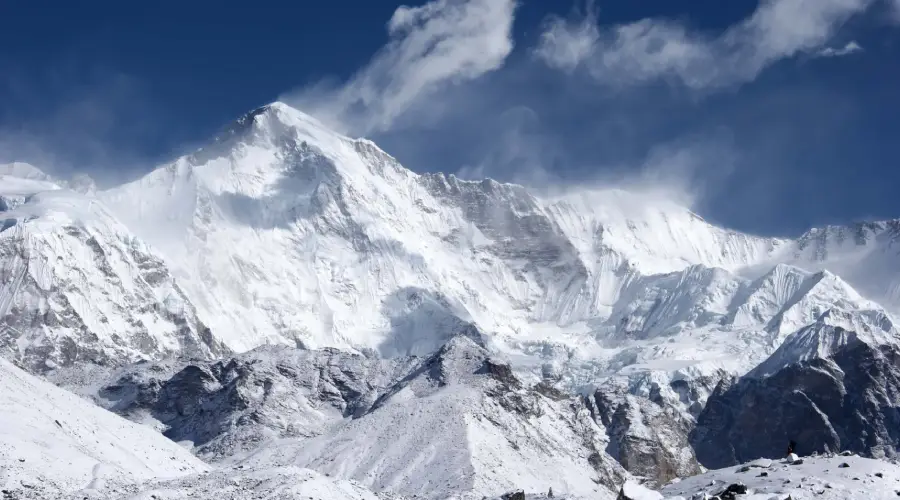
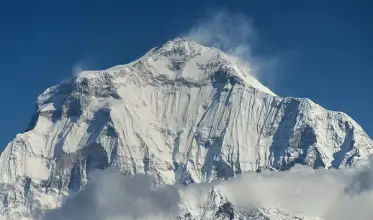
Climbing the north-west face of Cho Oyu.
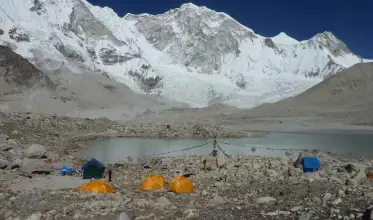
From the base camp we climb along the glacier toward the mountain and Camp 1. Because of the high altitude, this first trip up the Gyabrag Glacier and onto the mountain itself is for familiarizing participants with climbing and their equipment. It provides an excellent opportunity to view the route that will be taken and assess the mountain conditions.
Once the expedition leader is happy with the team's acclimatization, we begin (weather permitting) to climb the mountain in earnest. In order to reach a position from which we can make successful summit bids, Sherpas will make sure that all camp stores and food are taken care of. The expedition leader will check to be sure that everyone is in good health and properly adjusted to the altitude.
Throughout the climb, the leader will use a method that adjusts team members to the ever-increasing altitudes. This will be achieved by "climbing high and sleeping low," until each person feels suitably well-adjusted to make the next move up to a higher camp. At each camp, the team will climb high but then return to the lower camp to sleep. Finally, the team will return to the base camp for a prolonged rest of at least four days before moving up to occupy Camp 3 in preparation for the ultimate climb to the top. Mountain camps are situated as follows:
Camp 1 - 6,400m
Camp 1 is at 6,400 meters and five to eight hours from the base camp. The camp is reached by a steep climb from the head of the glacier at 6,100m. From here, the route follows steep scree, which improves as height is gained. Camp 1 is located on a broad shoulder of snow, which leads up to a ridge above the camp.
Camp 2 - 7,000m
Above Camp 1, a snow ridge leads to a series of ice cliffs. The way through these involves climbing a steep 50m ice wall at over 6,600m. Although straightforward, this is the hardest climbing on the route, requiring great effort to climb the steep ice at such an altitude. Improved acclimatization and greater familiarity make the prospect of subsequent climbs through the ice cliffs less daunting, but the challenge remains physically strenuous with each journey to Camp 2. Throughout this section, fixed ropes are placed in conjunction with other teams operating on the mountain at the same time. Above the ice cliffs, there are several large crevasses which we make our way around until they finally give way, giving access to Camp 2 at 7,000m. Depending upon the snow conditions, this can be a very demanding day of six to eight hours.
Camp 3 - 7,400 meters
Camp 3 is at 7,400m and roughly four hours above Camp 2. This camp is located beneath a rock band that cuts off the snow slopes of the upper basin. As we rise above the beautiful Nangpa Gosum peaks, the mountains of Nepal can be seen to the south, and the arid Tibetan plateau to the north. Although the distance to Camp 3 is short and easy, the high altitude makes the path more demanding.
Once at Camp 3, we must make every effort to prepare for the following day. This means eating, drinking, and resting. To function effectively on Summit Day, it is vital for climbers to drink as much as possible in order to replenish the calories and fluids lost during the climb. This can be a challenge, because the altitude makes even slight physical work difficult, and the task of boiling water slower than usual.
Summit Day
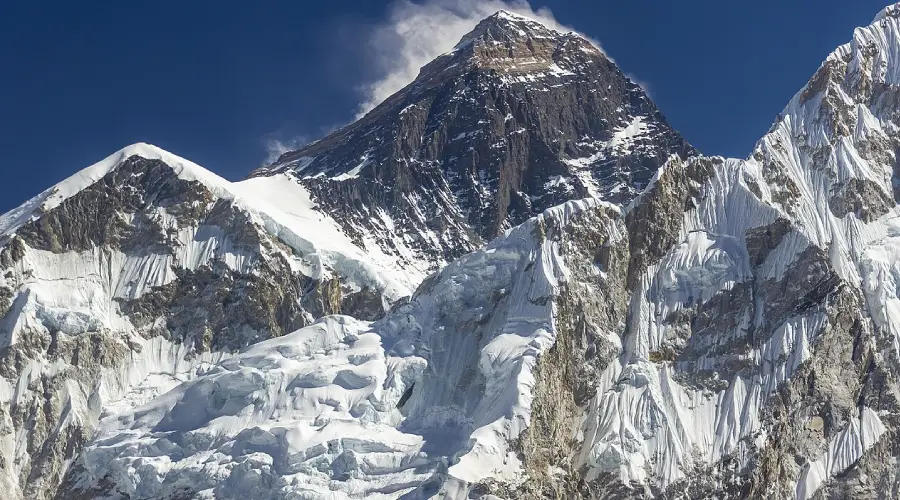
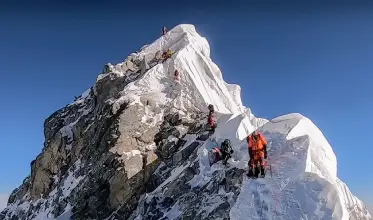
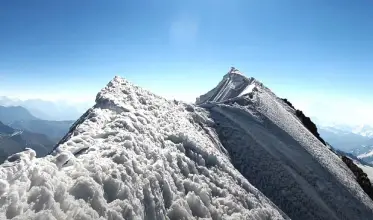
Summit Day begins early, as it takes several hours to make breakfast, hydrate properly, and fully prepare equipment before embarking. The camp faces west, so there is plenty of time for preparations before we depart as the sun rises. Once on our way, easily navigable snow and rock ledges lead through the short rock band above the camp. Gradually the angle of the slope relents until we emerge onto the broad windswept back of the mountain. Now it is only a matter of putting one foot in front of the other to slowly gain the towering distant summit of Cho Oyu, overshadowed only by Mt. Everest. The magnificent vista surrounding us as we cross the vast summit plateau toward the peak includes Ama Dablam, Lhotse, Nuptse, Menlugtse, Gyachung Kang and Gaurisankar, as well as the peaks of the Khumbu Himal. We reach the summit five to eight hours after leaving Camp 3.
For the descent the same route will be followed, with nights spent at Camp 3 and Camp 1.
On day 40 all climbers should be back at the base camp with belongings and equipment. Packing up the base camp is always time consuming, and everyone will need to help ensure that we leave no trace of our passing.
If we are successful in completing the climb ahead of schedule, we will leave the base early and head back to Kathmandu. However, past experience has shown that we will need all of the allotted days unless mountain conditions and the acclimatization process go exceptionally well.


 SEASON
  DURATION
  DIFFICULTY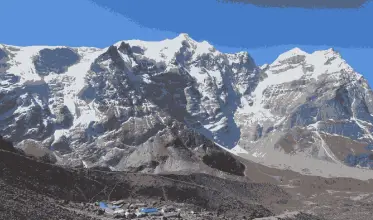
.webp)